
They can receive and process orders, book flights and hotels, calculate the cost of purchases and accept payments, notify about discounts and new products or services, and search for information online.
Chatbots are widely used across many industries. They help businesses handle routine tasks. Business owners no longer need to constantly hire and train people to consult potential clients. It’s much easier to train a chatbot once.

According to forecasts by Gartner, an IT research firm, by 2020 up to 85% of business-to-customer interactions will be handled by chatbots.
Even today, in the U.S., when ordering food online at a restaurant, you can say “same as last time” and the bot will understand you. This is not fantasy—it’s our reality.
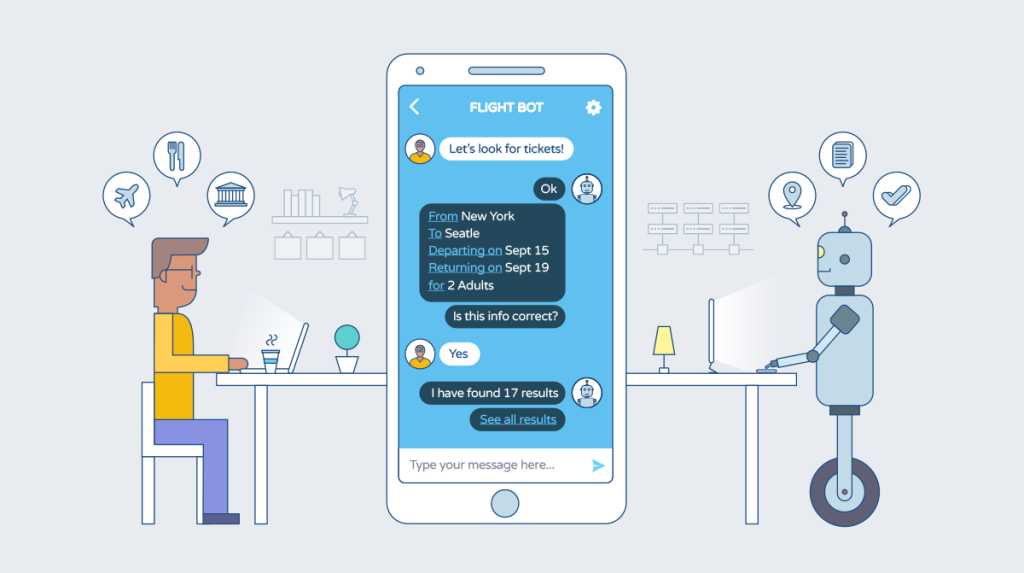
The main advantage of a chatbot is the ability to save the client’s time. That’s what people value—being able to make a purchase in just two clicks, and being understood without saying much.
How to create a chatbot?
There are two main ways to create chatbots: by writing code or using special online chatbot builders that don’t require programming skills.
Builders allow you to create chatbots that follow predefined rules. No programming knowledge is required—just a well-thought-out response script. However, these bots can’t handle complex queries, and their functionality is limited by the platform. That’s the main drawback of this method.
To build a custom, advanced chatbot with unlimited functionality, you’ll need to write code. Such bots can do much more: understand user mood, analyze and remember behavior and requests.
Most advanced chatbots are created using the Python programming language and the Django framework.
Services for building chatbots
1. Aimylogic is a builder that allows you to create bots capable of understanding natural language and communicating via text or voice. To get started, visit aimylogic.com and sign up. You then build a bot tailored to your needs and integrate it into messengers, social networks, or voice assistants like Yandex Alice and Google Assistant.
2. Bot Kits is a Russian-language service for creating chatbots for popular messengers, social networks, and websites. Development is done using simple block diagrams.
The bot can communicate via text and also send photos, videos, and audio.
3. Botmother is a kind of CMS with powerful tools for creating and managing bots for Telegram, WhatsApp, Viber, Facebook, VK, and Odnoklassniki.
You build conversation blocks in a visual editor and link them based on a preset scenario. The bot works across all mentioned platforms.
The creators of botmother.com call it “WordPress for chatbots” and claim you can build your first assistant in just one hour. Will you try?
4. Chatfuel is one of the first platforms for creating bots for Telegram and Facebook. Today, it remains one of the most popular and user-friendly systems, with over 300,000 bots created, including for companies like Forbes, Adidas, Audi, BMW, MTV, Microsoft, and more.
When developing a bot in Chatfuel , as with other platforms, the most important thing is building a solid logic flow. You’ll also find templates for different niches that you can customize.
5. Flow XO is a platform that allows you to build bots for messengers like Telegram, with over 100 integrations, including Trello, Gmail, Google Calendar, and more.
Using Flow XO isn't extremely simple, but you still won’t need coding skills—and you can create fairly advanced bots.
6. Manybot is a Telegram bot that helps you create other bots. Just open Telegram, find @Manybot, click “Start,” and follow the instructions.
Manybot supports 6 interface languages, lets you build menus and submenus, and set up auto-posting from YouTube or RSS feeds.
7. Gupshup is a more advanced service where bots are also tested by experienced developers.
The “Flow bot builder” tool works similarly to other platforms, allowing visual bot creation with scripted flows.
The “Bot builder IDE” is for developers who need to build complex dialogues and integrate natural language processing.
Supported platforms on Gupshup include Facebook Messenger, Telegram, Viber, Skype, VKontakte, and others.
What else can chatbots do?
Besides helping businesses and saving time and money, chatbots can also be used in education.
You’ve probably heard of the language-learning app Duolingo. They were among the first to integrate bots into education. Their bot helps learners practice and improve their speaking skills. Now, Duolingo users can train anytime they want.
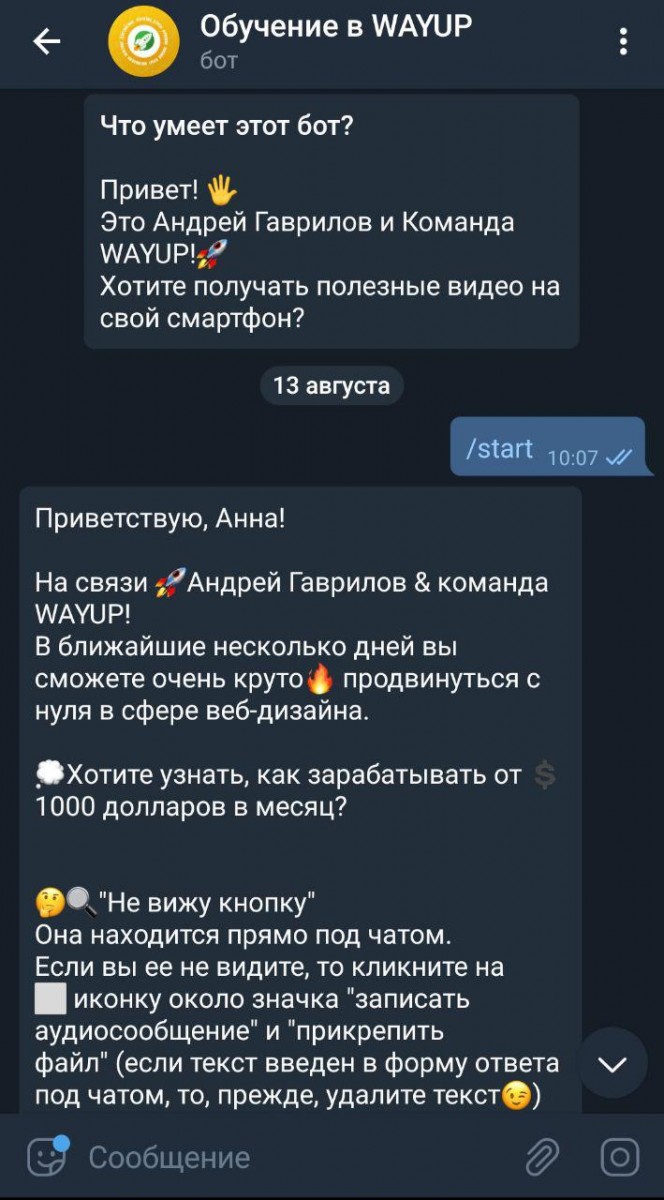
WAYUP also created their own Telegram bot @wayup_bot. With it, you can take a course that helps you get started in web design from scratch.
The advantages and relevance of chatbots are obvious. For business owners, they are an effective marketing tool that keeps them ahead of competitors. For developers, they are an opportunity to earn by creating bots tailored to each company’s needs.