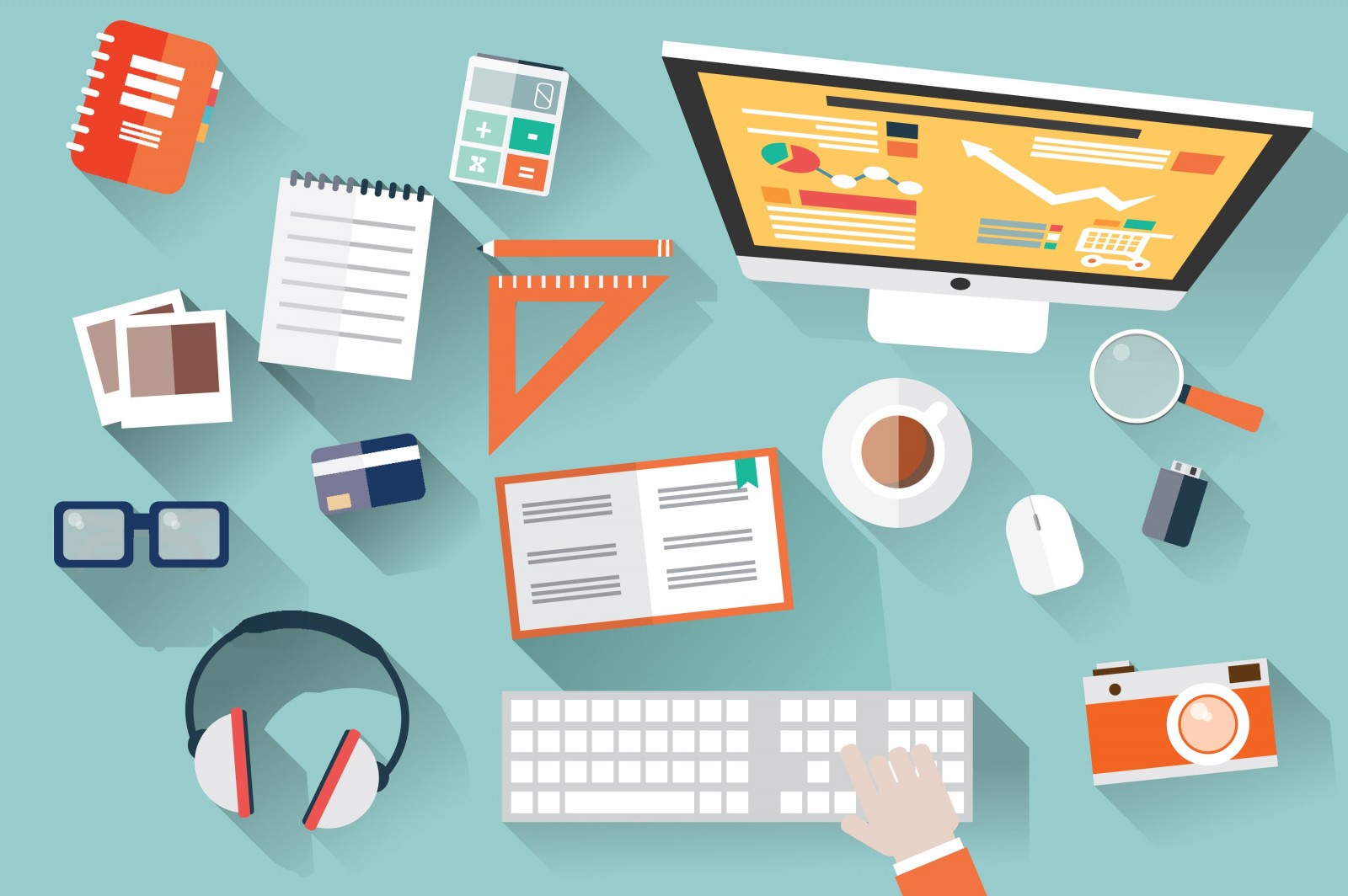
Let’s start with a quick reminder of what flat design actually is. At its core, this style is defined by two-dimensionality, flat interface elements, maximum simplification, and a strong focus on color combinations. There are no shadows, gradients, or other volumetric effects — everything aims for visual simplicity. But this simplicity is only on the surface — creating high-quality flat design often requires more effort than a standard approach. And it’s no coincidence that many top global brands are simplifying their logos and web pages — when done right, flat design delivers original and eye-catching results.

The Secrets Behind Flat Web Design's Popularity
Three-dimensional images tend to overwhelm our brains with information — we perceive them as real-world objects, and sometimes the visual overrides the actual message. Today, many websites are overloaded in this way — everyone wants to show off their skills and grasp of modern technologies, adding as many interactive details and 3D effects as possible. As a result, visitors get mentally exhausted without even realizing it — and leave the page. A flat design site is the opposite: everything is simple, minimal, and clear. However, it’s worth noting that this isn’t a one-size-fits-all solution — the style should be chosen based on the project’s goals, not just current trends.

How to Create Flat Design?
The main challenge of flat design lies in the fact that, without flashy details and with minimalism as the base, the focus shifts entirely to color selection, typography, and composition. That means everything has to be perfectly balanced and harmonious — there are no distractions to hide design flaws. In the WAYUP web design courses, you’ll explore the techniques of this style in detail, learning how to create clean yet sophisticated designs. You can learn all of this in the “Brand Vector” and “Lucky Ticket to Thailand 2.0” courses. They cover essential design principles, examples of effective color combinations, successful layouts, and how to use them. These skills help you meet client needs, increase site traffic, grab your target audience’s attention, and boost conversions.